
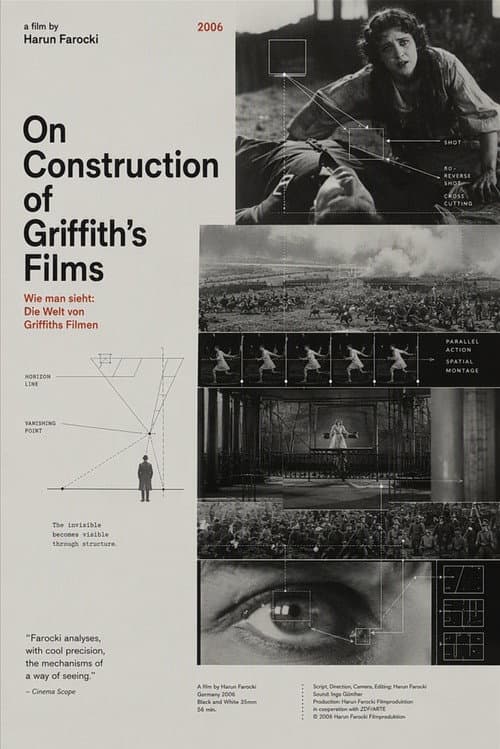
In On Construction of Griffith' Films we picked a sequence from Griffith Intolerance (1916). It shows a dialogue between a man and a woman, filmed and edited as shot and counter shot. We reproduce the shot on two monitors to reveal its narrative character and also because analysis requires us to dissect something. The narrative form of shot / counter shot, which would later become the norm for depicting dialogue in film, remains novel here. A few years earlier Griffith had still used tracking shots to tell his stories. In The Lonedale Operator (1911), cuts were made only when the scene changed; a cut in the movie's story line. In Intolerance, cinematography had already achieved such a level of independence that it was the camera that constituted a room with it's detail. -Harun Farocki
What critics are saying
Verdicts use the same scale as your list: highly recommended through avoid — plus optional scores and blurbs.
Nobody on Critic, Sir! has logged a verdict for this title yet. The silence is either respectful or suspicious.
Sign in and use Add to My List below to share your own verdict.
Watching Lists
to create and edit public lists.
Loading lists…
Purchase & Discovery
Find this title on Amazon
Digital
Prime Video & digitalAmazon mixes rent, buy, and Prime in one place — one search covers the usual options.
Physical edition
4K Blu-ray & physical releasesSearch on AmazonOfficial merchandise
Official-style merch searchApparel, collectibles, and moreAs an Amazon Associate, Critic, Sir! earns from qualifying purchases. Full disclosure