
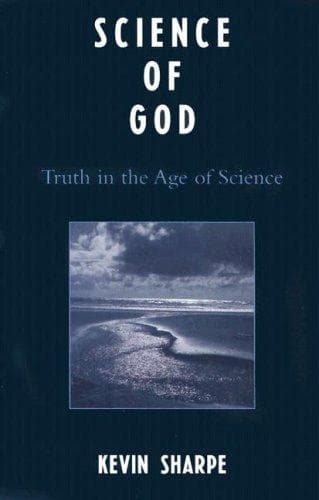
"Is theology responsible to tradition or new insight? Institutional church or humanity at large? Spiritual or everyday existence? Revelation or scientific findings? In his new bookScience of God:Truth in the Age of Science, Kevin Sharpe proposes a method for doing theology which does not divorce it from the practical applications of science. Not only does this work establish that theology ought to be empirical in what it says about the world and God's relationship to it, but it also outlines a clear method for doing this. Science and theology can each share the same empirical method: when each attempts a description of any part of reality, it is relying on its own essential assumptions, or lens. When applied to theology, the method assumes the existence of God and then seeks the nature of God using falsifiable and verifiable techniques. Starting with the sciences that examine happiness--particularly biology, genetics, psychology, and social psychology--Science of God seeks to understand the spiritual nature of humans and, through it, the nature of God."--Publisher's website.
Sign in to add this book to your list.
What critics are saying
Verdicts use the same scale as your list: highly recommended through avoid — plus optional scores and blurbs.
Nobody on Critic, Sir! has logged a verdict for this title yet. The silence is either respectful or suspicious.
Sign in and use Add to My List below to share your own verdict.
Reading Lists
Sign in to create and edit public lists.
Loading lists…
Purchase & Discovery
Find this title on Amazon
Physical edition
All Books (physical editions)Search on AmazonOfficial merchandise
Official-style merch searchApparel, collectibles, and moreAs an Amazon Associate, Critic, Sir! earns from qualifying purchases. Full disclosure